
Water, Parks and Specialty Work
Dams and reservoirs, concrete water tanks, pump stations, substations, parks and restoration: the jobs that don't fit in a single trade.
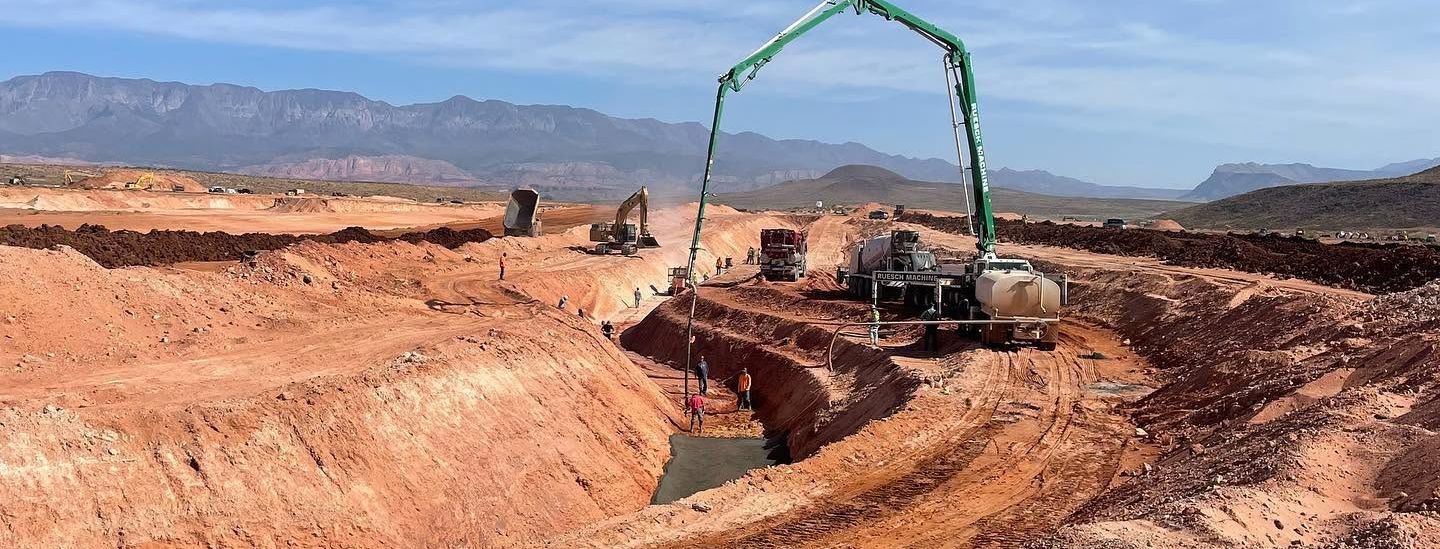
Some are for public agencies, like the Washington County Water Conservancy District and St. George City.
Projects
- Southern Shores Dam & Reservoir
- Dixie Springs Water Tank
- WCWCD Red Hills
- Snake Hollow
- Little Valley Park
- 3 Falls Substation
- Blacks Canyon Restoration Project
Also on our list: Warner Valley Tank, City Creek Pump Station/Pipeline.
How it gets built
How a Water Tank Gets Built
A city water tank is a big concrete box, often set partway into a hill. Here's one cut in half, start to finish.
Dig and Prep the Pad
We clear the site, dig down to solid ground, and compact a gravel base. Everything else sits on this.
Footings and Floor
Rebar goes in, then the footings and the floor slab are poured. Waterstops at the joints keep the tank tight.
Form and Pour the Walls
Forms go up on both sides of the rebar and the walls are poured in place. Once the concrete cures, the forms come off.
Columns and Roof
Columns go up inside to carry the roof, then the roof slab is formed and poured. An access hatch and an air vent go on top.
Pipes In
Inlet, outlet, overflow and drain lines go through the walls and out to a valve vault. That's how water gets in and out.
Backfill
Drain rock and a footing drain go in at the base, then we backfill around the walls in compacted lifts, partway up.
Fill, Test and Disinfect
The tank is filled and watched for leaks, then disinfected before it goes into service.


More Photos


